ChatGPT signs fake New Yorker cartoons with real artists' names
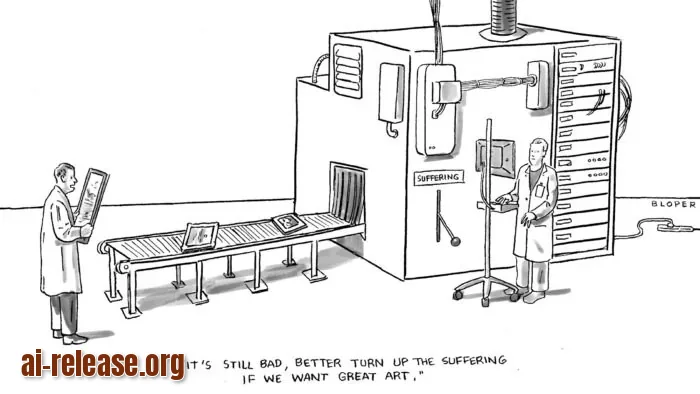
⚡ The gist in 5 seconds - ChatGPT generates cartoons in the style of The New Yorker and signs them with the names of real magazine artists who have nothing to do with those images. - The problem was discovered by Nieman Lab journalists: such images are circulating on online forums and social media, including a viral cartoon featuring Dolly Parton and Tim Curry. - After being notified, OpenAI made ChatGPT issue a guardrail-violation warning, but it continues to add signatures to at least some of the generated images. ### 🔍 What was found In late August 2026, a cartoon showing Dolly Parton and Tim Curry standing at the gates of heaven went viral on Twitter. The tweet garnered 25,000 likes, and the image spread across Facebook, Instagram, and Bluesky. In the bottom right corner was the signature "BLOPER" — the pen name of The New Yorker cartoonist Brendan Loper. Loper neither drew nor signed this picture: it was generated by ChatGPT at the request of a Dolly Parton fan who asked for "a New Yorker-style cartoon." The artist learned about it from his twin brother, and then strangers began emailing him and reaching out on social media. This was not the first case: in May, a stranger warned Loper via Instagram that his signature had appeared on an image created by a chatbot. Loper then found more examples on Reddit. Nieman Lab staff documented more than 15 current and former The New Yorker contributors whose signatures ChatGPT reproduces without permission: Harry Bliss, Emily Flake, Joe Dator, Pat Byrnes, Peter C. Vey, Jason Adam Katzenstein, George Booth, Lisa Donnelly, Ellis Rosen, Saul Steinberg, and others. Even Warren Miller, who was published in the 1960s, turned out to be among the signed. In its own tests, Nieman Lab found that ChatGPT regularly produced single-panel black-and-white drawings with clean lines and a "sardonic caption," although some of the punchlines made no sense. Not every image contained a signature — some were signed with meaningless pseudonyms — but real signatures regularly belonged to real people. ### 💡 Why it matters An artist's signature is not just a name but a "certificate of authenticity," as Loper puts it. He puts it only on works that are meant to be recognized as created by his hand. In an era when cartoons are easily taken out of context and distributed without a license, the signature also acts as a watermark tying the drawing to its author. When a generative model puts such a signature on an image no human drew, attribution is broken: telling the genuine from the imitation and establishing the true author becomes far more difficult. ### 🧩 Context The artists themselves are already feeling the consequences. Loper called the forged signature a "violation of personhood": "my name is my name." Emily Flake, whose signature "e. flake" has also appeared on generated images, says she sees "the DNA of her work," but that overall the images look like a blend of different cartoonists' styles, with the signature like an attributed quote. She has contributed to The New Yorker since 2008. In response to a Nieman Lab inquiry, OpenAI stated [text cut off]
🤖 AI summary
- Date: 2026-10-06
- Source: www.niemanlab.org
- Tags: ChatGPT, New, ИИ-арт
- Key facts:
- ⚡ The gist in 5 seconds - ChatGPT generates cartoons in the style of The New Yorker and signs them with the names of real magazine artists who have nothing to do with those images.
- - The problem was discovered by Nieman Lab journalists: such images are circulating on online forums and social media, including a viral cartoon featuring Dolly Parton and Tim Curry.
- - After being notified, OpenAI made ChatGPT issue a guardrail-violation warning, but it continues to add signatures to at least some of the generated images.
- 🔍 What was found In late August 2026, a cartoon showing Dolly Parton and Tim Curry standing at the gates of heaven went viral on Twitter.
- The tweet garnered 25,000 likes, and the image spread across Facebook, Instagram, and Bluesky.
- In the bottom right corner was the signature "BLOPER" — the pen name of The New Yorker cartoonist Brendan Loper.
- Loper neither drew nor signed this picture: it was generated by ChatGPT at the request of a Dolly Parton fan who asked for "a New Yorker-style cartoon." The artist learned about it from his twin brother, and then strangers began emailing him and reaching out on social media.
- This was not the first case: in May, a stranger warned Loper via Instagram that his signature had appeared on an image created by a chatbot.
ChatGPTNewИИ-арт
Read the guide on this topic
← PreviousLocal 27B model vs Claude: investigating a production incidentNext →Windows 11 26H2: 3 GB less RAM at idle and faster app launches
Source: www.niemanlab.org · post in Telegram