Zodiac AI toy: China bets on companions you owe nothing
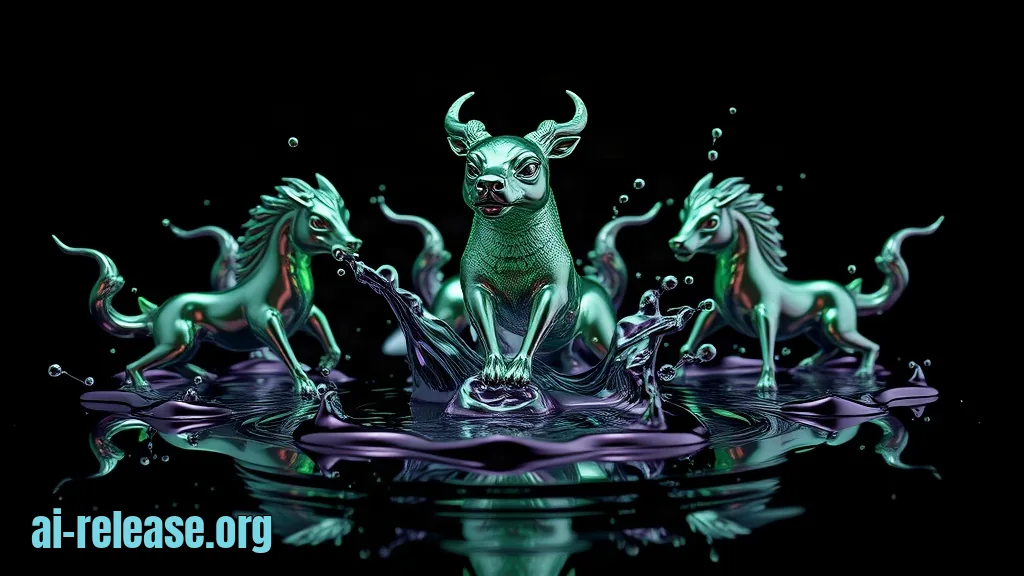
The AI companion race is moving off the screen and into plastic. The most interesting part of the Hanke Intelligent story isn't the zodiac — it's the price of attention: this product sells silence, not conversation.
36Kr profiles a startup building a desktop AI toy shaped around the Chinese zodiac. Target user: the office worker. Promise: low emotional load, an emotional outlet. It reads like marketing, but underneath sits a precise complaint about the market — and it's worth taking apart.
Three complaints the startup throws at the market
The 36Kr headline lays it out: designer toys are only about looks, smart speakers lean toward being tools, online software has no warmth. Each hit lands on a real gap.
Collectible figures sell looks and shelf space. There's no dialogue in them, only a pose. Smart speakers sell tasks — turn on the light, set a timer. They always sound slightly like a boss. Apps sell engagement: you have to open them, you have to reply, they count your streak. After nine hours in an office, all of that is one more job.
The gap between the three categories is real: there is no object in the room that simply is. Not an assistant, not an interface, not a subscription — a creature with a character.
Low load is the actual product
In that phrase, the operative word is load, not AI. A companion living on your phone demands a reply: skip a day and you get a notification, skip a reply and you get guilt. A toy on the desk demands nothing. You don't owe it an answer. You don't have to charge it for a week.
It's the same shift that once separated a pocket pet from a chat window: the object has a state but no requirements. The zodiac adds a second layer — personalization without questions. Pick your archetype, and the product has a biography before it's even switched on. Cheap trick? Sure. Does it work? In China, quite possibly: the zodiac is baked into the language of gifting and superstition, and 'a figurine for a colleague' is a distribution channel that costs nothing in ad spend.
What looks like a shop window here
A 36Kr startup profile is not a launch. There is no price, no batch size, no audience figure, no revenue, and no data on how many people still keep the thing on their desk a month later. For this category, retention is the only number that matters.
Then comes the boring part. An AI toy is a microphone, a speaker, plastic, a cloud model and traffic. Its recurring cost is higher than a figurine's. Privacy questions are the same as a smart speaker's — except now with emotional attachment attached: someone puts a microphone on the desk and talks to it about work.
The hardware companion market is already littered with corpses. Devices shipped, collected glowing reviews, and quietly died the moment the developer stopped updating the app. Attachment to a character does not survive a dead server.
Why it still belongs on the radar
Because China is currently the only market packaging AI into cheap objects with personality faster than into software. While Western companies argue about keeping users inside a subscription, teams here try selling the hardware once and building attachment to a character. If it works, the advantage won't be the model — it'll be who the person decided to put on the desk.
And one more thing: this toy has no language barrier in manufacturing, but it does have one in meaning. Outside China, the zodiac needs explaining and the character needs reinventing. Exporting plastic is cheap. Exporting a symbol is not.
💬 What to argue about
- Is a character-driven AI toy a new device class, or a gift that gathers dust within a month? What has to be inside for the answer to change?
- The zodiac as built-in personalization: an edge at home, or a trap that keeps the product inside China?
- Who actually pays for 'low load' — a one-off plastic purchase or a subscription to a cloud model? Which model survives once the novelty burns out in a month?
Prediction: China's desktop AI companion category will survive one more hype cycle and one or two survivors — and the winner will have the stronger character, not the stronger model.
Disclaimer: not officially confirmed — single source, a 36Kr startup profile with no figures and no price.
🤖 AI summary
- Date: 2026-10-27
- Source: www.36kr.com
- Tags: AI, China, Gadgets
- Key facts:
- The AI companion race is moving off the screen and into plastic.
- The most interesting part of the Hanke Intelligent story isn't the zodiac — it's the price of attention: this product sells silence, not conversation.
- 36Kr profiles a startup building a desktop AI toy shaped around the Chinese zodiac.
- Target user: the office worker.
- Promise: low emotional load, an emotional outlet.
- It reads like marketing, but underneath sits a precise complaint about the market — and it's worth taking apart.
- The 36Kr headline lays it out: designer toys are only about looks, smart speakers lean toward being tools, online software has no warmth.
- Each hit lands on a real gap.
Source: www.36kr.com · post in Telegram