Claude passes physicist's challenge: N=4 super Yang-Mills to nine loops
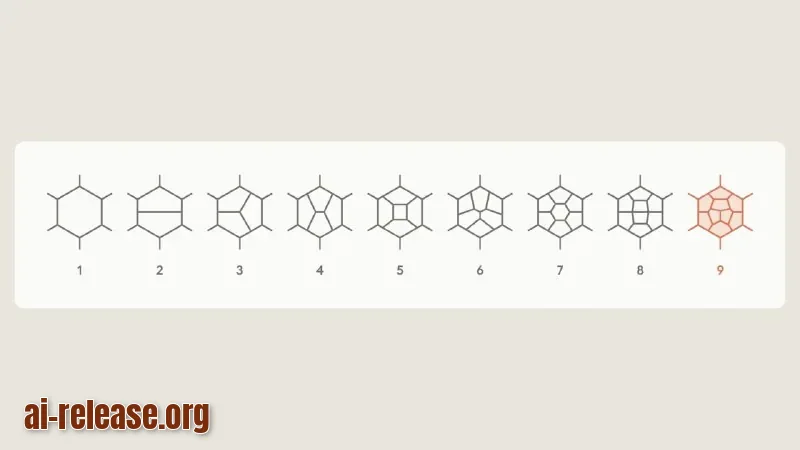
⚡ The gist in 5 seconds - Physicist and science writer Matt von Hippel threw down a challenge to AI companies from the field of scattering amplitude calculations. - Anthropic took on a task in N=4 super Yang-Mills theory — pushing the computation to nine loops. - According to the author, the challenge was beaten within a month; technical details of the solution are not provided in the text. ### 🔍 What was found In a guest post on Anthropic's website, Matt von Hippel, a former theoretical physicist turned science writer and author of the 4gravitons.com blog, described how he challenged AI companies. He wanted to see whether an LLM could make progress on a problem he knew well and considered computationally hard. Specifically, he proposed: "Give us N=8 supergravity to seven loops or N=4 super Yang-Mills to nine loops." Anthropic took on N=4 super Yang-Mills. The text explains that scattering amplitudes are formulas physicists use to compute the probabilities of particle reactions from their momenta and energies. Such calculations are needed to compare predictions with experimental results from facilities like the Large Hadron Collider. Complexity grows with the number of "loops": a measure of the allowed complexity of interactions. In practice, most formulas have been computed to two loops, some to three, and the most precise predictive quantity to five. Von Hippel himself helped calculate a three-loop amplitude, got to seven loops, but ran out of steam. Lance Dixon of SLAC pushed the calculation to eight loops a few years ago. That work used the experimental bootstrap technique. ### 💡 Why it matters The challenge was deliberately framed to test whether AI could use the same computational resources available to an academic researcher and solve a problem considered unreachable due to computational constraints. The fact that the challenge was beaten within a month shows that LLMs can work in the narrow domain of theoretical physics, where computations hit resource limits. For geeks, it's a reason to take a closer look at Claude's capabilities in scientific tasks — though the technical details of the solution are not disclosed in the post. ### 🧩 Context N=4 super Yang-Mills is a "toy" theory that amplitudeologists use to hone methods rather than to describe the real world. "N=4" means each particle has four supersymmetric partners, rather than one as in more realistic variants. This surplus of particles makes the theory unrealistic, but paradoxically simplifies calculations: the balance between particles leaves only certain combinations of variables. That's why the theory is convenient for stress-testing new approaches — and it's precisely on it that Anthropic decided to show that Claude could reach nine loops.
🤖 AI summary
- Date: 2026-09-25
- Source: www.anthropic.com
- Tags: claude, anthropic, физика, ии, амплитудология
- Key facts:
- ⚡ The gist in 5 seconds - Physicist and science writer Matt von Hippel threw down a challenge to AI companies from the field of scattering amplitude calculations.
- - Anthropic took on a task in N=4 super Yang-Mills theory — pushing the computation to nine loops.
- - According to the author, the challenge was beaten within a month; technical details of the solution are not provided in the text.
- 🔍 What was found In a guest post on Anthropic's website, Matt von Hippel, a former theoretical physicist turned science writer and author of the 4gravitons.com blog, described how he challenged AI companies.
- He wanted to see whether an LLM could make progress on a problem he knew well and considered computationally hard.
- Specifically, he proposed: "Give us N=8 supergravity to seven loops or N=4 super Yang-Mills to nine loops." Anthropic took on N=4 super Yang-Mills.
- The text explains that scattering amplitudes are formulas physicists use to compute the probabilities of particle reactions from their momenta and energies.
- Such calculations are needed to compare predictions with experimental results from facilities like the Large Hadron Collider.
claudeanthropicфизикаииамплитудология
Read the guide on this topic
← PreviousHave open-weight LLMs caught up with closed ones? A production checkNext →RaymanOriginsRecomp: static recompilation of Rayman Origins from Xbox 360 to PC and Android
Source: www.anthropic.com · post in Telegram