In the US, nobody wants to date an AI company employee
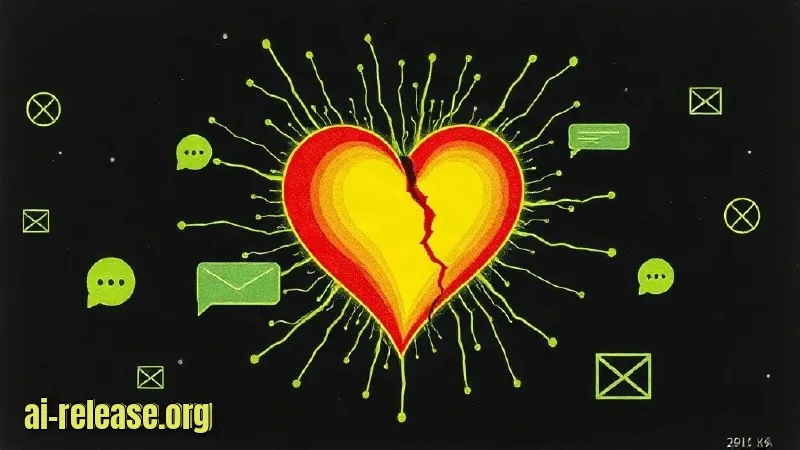
The dating market is the most honest opinion poll in tech. Nobody performs there: if people type «don't message me if you're in AI», the industry's reputation is worth less than it looks on a conference stage.
A new filter
Korean business outlet Herald Corp recorded a shift in American dating: a job at an AI company is now a reason to say no. Not «doesn't smoke», not «no weird exes» — «not from AI».
While the industry pitches its models as conversational partners, therapists and eventually «the one», actual humans vote with their feet. And with blocks.
The irony
This is the one sector selling intimacy on an industrial scale — companions, avatars, voice assistants, «I understand you better than a real person» — and it just got labeled as the place where intimacy doesn't live.
It isn't about the code. It's about the mode of work. People read the news and draw conclusions: crunch, ethics scandals on a weekly cycle, a habit of seeing humans as a dataset. They make the call before the first date.
The label may be unfair. It still works.
Who actually pays
Not just the employees. The companies.
HR departments compete for engineers with salaries and equity, and missed something else: their industry turned into a social liability outside the office. Hiring isn't just an offer. It's how a person answers «so where do you work?» over dinner.
Irony, level two: some of these companies build dating and chat products. Their own staff just became an anti-ad for their own market.
And one more thing. Dating culture is the early warning system. In-app filters are a poll of millions of people with zero focus groups. If AI employment is now a minus in partner selection, the next question is whether it becomes a minus when choosing a doctor, a lawyer, a teacher for your kid.
What happens next
Two scenarios. The wave washes away, like every moral panic about a new profession — remember what people once thought about anyone who «works on the internet». Or the label sticks, and the AI industry gets something it never had: a reputation bill outside model launches.
Neither outcome is fixed with a press release. Trust in an industry is built and destroyed in the same place: an ordinary conversation between two people, one of whom doesn't want a second date.
💬 What to argue about
1. Is this a durable shift, or a media wave that dies with the next model release?
2. Is «works at an AI company» a fair signal about a person — hours, values — or the same prejudice as refusing to date accountants?
3. If employer filters stick, who reacts first: AI companies rebuilding their public image, or dating apps adding it as a profile field?
Prediction: Within the next season, major AI companies will publicly perform «humanity» — employee stories, capped hours, volunteering — not because conditions changed, but because the label is now hurting hiring.
Disclaimer: not officially confirmed, single source — Korean business outlet Herald Corp; the story describes the US dating market.
🤖 AI summary
- Date: 2026-11-23
- Source: biz.heraldcorp.com
- Tags: AI, Deyting, Koreya
- Key facts:
- The dating market is the most honest opinion poll in tech.
- Nobody performs there: if people type «don't message me if you're in AI», the industry's reputation is worth less than it looks on a conference stage.
- Korean business outlet Herald Corp recorded a shift in American dating: a job at an AI company is now a reason to say no.
- Not «doesn't smoke», not «no weird exes» — «not from AI».
- While the industry pitches its models as conversational partners, therapists and eventually «the one», actual humans vote with their feet.
- This is the one sector selling intimacy on an industrial scale — companions, avatars, voice assistants, «I understand you better than a real person» — and it just got labeled as the place where intimacy doesn't live.
- It isn't about the code.
- It's about the mode of work.
Source: biz.heraldcorp.com · post in Telegram