OpenAI Feared the 'Optics' on Hacker News in the Pirated Books Case
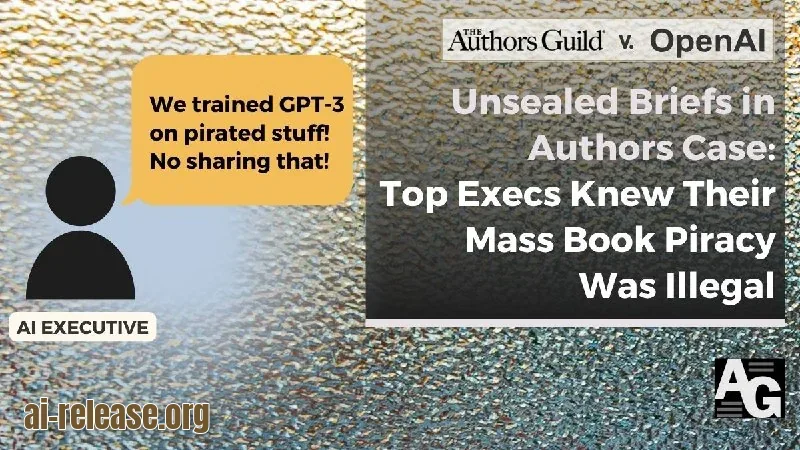
⚡ The 5-Second Summary - The gist: OpenAI feared that Hacker News headlines would appear about the company using data from a 'sketchy' Russian website. - Where to find it: unsealed documents from the Authors Guild lawsuit against OpenAI have been published on the Authors Guild website. - The limitation: this is only part of a massive legal battle, with further hearings expected in early 2027. ### 🔍 What Was Found According to unsealed materials from the Authors Guild case against OpenAI and Microsoft, the company's top executives knew about the use of the pirate library LibGen in training models. In internal correspondence, OpenAI researcher Sam McCandlish explained that what worried him was not legality, but the 'optics': he feared that a headline would appear on Hacker News reading 'openai uses copyrighted data from sketchy russian website.' Then-research director Dario Amodei also acknowledged that LibGen as a training dataset 'looks sketchy.' The documents cite 2019 correspondence, when Sam Altman and Dario Amodei presented an early version of GPT-3 to Bill Gates and Microsoft CTO Kevin Scott, disclosing the use of LibGen. Later, in the summer of 2022, OpenAI launched a project called 'Clear' to remove traces of LibGen from its systems — employees discussed how to 'scrub' mentions from Slack, GitHub, and storage systems. The lawsuit claims this was done to conceal evidence. ### 💡 Why It Matters These facts show that for OpenAI, the priority was not legal propriety but its reputation in the tech community. Executives knowingly used pirated materials and worried about how it would look in the eyes of developers and engineers on Hacker News. For AI watchers, this is an important marker of corporate ethics: the company was willing to risk violations but did not want public condemnation. The practical takeaway for the community is an understanding of how decisions are made inside major AI labs. ### 🧩 Context This concerns a class-action lawsuit filed by the Authors Guild and well-known writers, including George R.R. Martin, John Grisham, and Jodi Picoult, against OpenAI and Microsoft. The lawsuit claims the companies trained their models on copyrighted books, deliberately ignoring authors' rights. The new documents, unsealed on September 21, 2026, became a turning point: they prove that executives knew about the potential harm to writers and American culture, yet continued using pirated sources anyway. The case is being heard in Manhattan, with new statements expected.
🤖 AI summary
- Date: 2026-09-27
- Source: authorsguild.org
- Tags: OpenAI, Hacker, авторские, суд, пиратство
- Key facts:
- ⚡ The 5-Second Summary - The gist: OpenAI feared that Hacker News headlines would appear about the company using data from a 'sketchy' Russian website.
- - Where to find it: unsealed documents from the Authors Guild lawsuit against OpenAI have been published on the Authors Guild website.
- - The limitation: this is only part of a massive legal battle, with further hearings expected in early 2027.
- 🔍 What Was Found According to unsealed materials from the Authors Guild case against OpenAI and Microsoft, the company's top executives knew about the use of the pirate library LibGen in training models.
- In internal correspondence, OpenAI researcher Sam McCandlish explained that what worried him was not legality, but the 'optics': he feared that a headline would appear on Hacker News reading 'openai uses copyrighted data from sketchy russian website.' Then-research director Dario Amodei also acknowledged that LibGen as a training dataset 'looks sketchy.' The documents cite 2019 correspondence, when Sam Altman and Dario Amodei presented an early version of GPT-3 to Bill Gates and Microsoft CTO Kevin Scott, disclosing the use of LibGen.
- Later, in the summer of 2022, OpenAI launched a project called 'Clear' to remove traces of LibGen from its systems — employees discussed how to 'scrub' mentions from Slack, GitHub, and storage systems.
- The lawsuit claims this was done to conceal evidence.
- 💡 Why It Matters These facts show that for OpenAI, the priority was not legal propriety but its reputation in the tech community.
OpenAIHackerавторскиесудпиратство
Read the guide on this topic
← PreviousMicrosoft quietly drops Copilot+ branding from new laptopsNext →A Mobile Phone from Almost Nothing: How AI Helped Build a Phone from Parts
Source: authorsguild.org · post in Telegram