Liquid AI releases d1 — the first decision model with no token generation
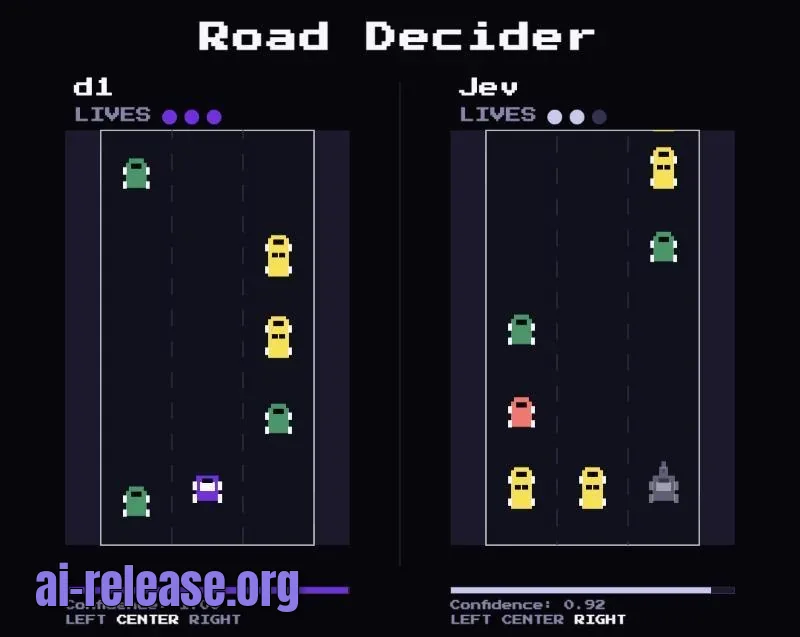
⚡ The gist in 5 seconds - Liquid AI has introduced d1 — the first model of a new class called decision models, which makes decisions rather than generating text. - The model is available via the Liquid API under the name 'd1:free', and a guide has been published for migrating existing LLM calls. - d1's architecture and parameters are not disclosed, and its claimed superiority over Jev is based on Liquid's own tests, not independent ones. ### 🔍 What was found The d1 model takes context as plain text or JSON and, in a single call, returns a structured result with probabilities for the given options. In the official API example, the output_tokens field is zero — there are no output tokens at all. Liquid offers three types of questions: Noul answers "yes or no," returning a probability from 0 to 1; Choice picks one option from several and outputs a probability distribution; Score rates an object on a scale with probabilities for each level. A single request can include multiple questions of different types — for example, simultaneously determining a ticket's category, selecting the responsible team, and assessing urgency. This approach eliminates the typical chain with a regular LLM: sending a request, waiting for JSON generation, parsing the response, and validating the schema. d1 immediately returns typed values that can be passed to the next stage of the decision chain. For Choice and Score, the model reports confidence and the full probability distribution. In its own reproduction of Decision Index 0.2.1 from Hugging Face, Liquid claims a score of 58.9 for d1 versus 57.9 for Jev 1.13: the newcomer beat its competitor in the Arts, Language, and Retrieval categories but lost in Tools and Knowledge. However, these figures come from Liquid itself, and d1 has not yet been added to the Hugging Face leaderboard. ### 💡 Why it matters d1 is the first representative of the decision models class, which differs from familiar generative models. The model is suited for classification, ticket routing, priority assessment, moderation, checks, tool-call approval, and model selection in AI agents. The returned probabilities help handle uncertain cases: they can be escalated to a larger model or a human. At the same time, Liquid emphasizes that for free-form text generation, dialogue, summarization, and complex multi-step reasoning, regular language models should be used. ### 🧩 Context d1 is the first model in a new family of decision models from Liquid AI. In format, it is close to the Jev model, which was created for similar structured decisions. Liquid is not yet revealing architectural details: only the API and documentation are publicly available, with no data on parameter count, weights, or the underlying architecture. The company has also prepared a guide for migrating existing LLM calls to work with d1.
🤖 AI summary
- Date: 2026-10-01
- Source: www.ixbt.com
- Tags: Liquid, decision, d1
- Key facts:
- ⚡ The gist in 5 seconds - Liquid AI has introduced d1 — the first model of a new class called decision models, which makes decisions rather than generating text.
- - The model is available via the Liquid API under the name 'd1:free', and a guide has been published for migrating existing LLM calls.
- - d1's architecture and parameters are not disclosed, and its claimed superiority over Jev is based on Liquid's own tests, not independent ones.
- 🔍 What was found The d1 model takes context as plain text or JSON and, in a single call, returns a structured result with probabilities for the given options.
- In the official API example, the output_tokens field is zero — there are no output tokens at all.
- Liquid offers three types of questions: Noul answers "yes or no," returning a probability from 0 to 1; Choice picks one option from several and outputs a probability distribution; Score rates an object on a scale with probabilities for each level.
- A single request can include multiple questions of different types — for example, simultaneously determining a ticket's category, selecting the responsible team, and assessing urgency.
- This approach eliminates the typical chain with a regular LLM: sending a request, waiting for JSON generation, parsing the response, and validating the schema.
Liquiddecisiond1
Read the guide on this topic
← PreviousWindows App Mobile Arrives on the App Store: Microsoft Renames Remote DesktopNext →AI explains, the app calculates: why I removed the language model from the button that allocates money
Source: www.ixbt.com · post in Telegram