How Neural Networks Are Used in Games: Generating Levels, Characters, and Dialogues

TL;DR
- Neural networks generate game content in three directions: levels, characters, and dialogues.
- Levels: GANs and diffusion models create new maps from a training dataset.
- Characters: the same visual models draw sprites and textures; reinforcement learning teaches NPCs to behave realistically.
- Dialogues: LLMs with RAG generate narratively consistent NPC replicas.
- A beginner should start with dialogues through an API — this requires only a text corpus and a key, not a GPU.
How level generation works
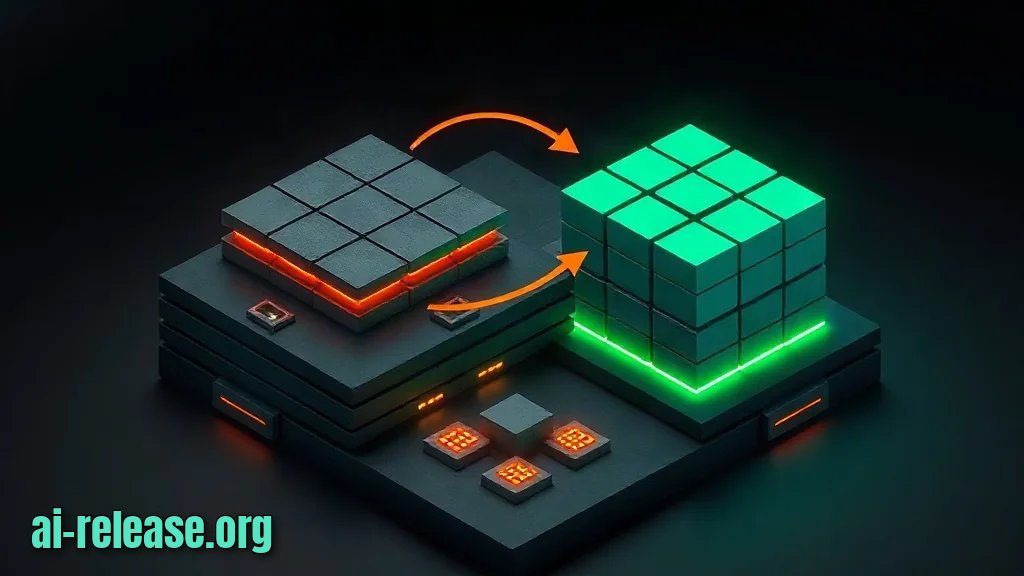
Neural networks do not invent level geometry from scratch; they learn the style from existing maps. The main tools are GANs and diffusion models.
GAN (generative adversarial network) — two networks compete: a generator creates maps, a discriminator tries to distinguish them from real ones. After training, the generator produces maps that are hard to distinguish from hand-made ones.
A diffusion model learns the opposite: it takes a noisy image and gradually removes noise, restoring a clean map. The developer feeds text conditions, and the model generates a map of a given type.
Пример: A request "dungeon with 5 rooms and two exits" returns a tilemap in JSON format:
{"rooms": 5, "exits": 2, "tiles": [[1,1,1],[1,0,1],[1,1,1]]}The developer loads this JSON into the engine and gets a playable level.
Why it works: the model learned the dependencies between rooms and corridors from the training maps, so the output looks natural.
Before training, you need a prepared dataset of levels. How to clean and label it is described in the guide: How to prepare data for a neural network: dataset cleaning and labeling.
How character generation works
Character generation is divided into two tasks: appearance and behavior.
Appearance: GAN or diffusion models create portraits, outfits, textures. The developer describes the character in text, the model returns an image, then the artist or developer refines it.
Пример: The description "gray-haired old merchant with a scar" gives a 256×256 portrait. The game loads it as a texture for an NPC model.
Behavior: reinforcement learning is used — the agent performs actions and receives rewards; the reward function forces it to adopt the desired tactic. This is how enemies learn to hide, flank, or hold a defensive line.
Пример: Reward function = +1 every second when the enemy stays within 3 meters of the player. After 10,000 training steps, the NPC begins to keep distance on its own.
Why it works: the reward function directly sets the goal, and the neural network accumulates experience to achieve it.
How dialogue generation works
Dialogues are generated by LLMs — large language models trained on huge text corpora. The model predicts the next phrase based on the player's replica, the character's role, and game lore.
To keep the character from forgetting the story, RAG is used. RAG — when the neural network first searches the necessary documents, and then answers based on them. The lore base is stored separately, and only relevant fragments are inserted into the prompt.
Пример: The file dialogue.py:
import requests

response = requests.post(
    "https://example-api.com/generate",
    json={
        "character": "innkeeper",
        "lore_context": ["player helped the mayor", "the inn burned down"],
        "player_message": "Do you have a room?",
    },
)
print(response.json()["reply"])
# Expected output: "No room — the fire took everything. But you helped the mayor, I will find you a bed."
Expected result: the phrase does not contradict the lore and takes into account the player's past actions.
Why it works: the model fills in language gaps, and RAG provides facts, preventing contradictions.
For post-processing of ready-made replicas — translation, shortening, style alignment — the guide is useful: AI for text work: translation, summarization, rewriting.
Where to start: practical path for a beginner
1. Choose your direction. Dialogues require the least resources: a text corpus and an API key. Levels and characters require a GPU and a training dataset.
Expected result: you know what you need to collect.
2. Prepare the data. For dialogues — gather the game's lore into one text file. For levels — export existing maps into a uniform format, for example, JSON tilemaps.
Expected result: a folder with ready-made files, for example data/lore.txt or data/maps/.
3. Connect the model. For dialogues — write an API request like in the example above. For levels/characters — run training on the prepared dataset.
Expected result: the first generated object appears — a replica, map, or portrait.
4. Evaluate the result. If the text contradicts the lore, add more context to the prompt. If the map breaks level geometry, expand the training dataset.
Expected result: stable quality.
5. Integrate into the game engine. Use the standard game engine functions to load the generated JSON or image.
Expected result: the object appears in the game and reacts to player actions.
Which models to choose at each step — see the overview: Best AI models and neural networks in 2026.
Comparison table
| Use case | Main approach | What you need | Typical result |
|---|---|---|---|
| Levels | GAN, diffusion models | Dataset of maps, GPU | Tilemaps, 3D layouts |
| Characters | GAN, diffusion, reinforcement learning | Reference images, reward function | Sprites, textures, NPC behavior |
| Dialogues | LLM with RAG | Lore corpus, API key | Dynamic NPC replicas |
How to choose your direction
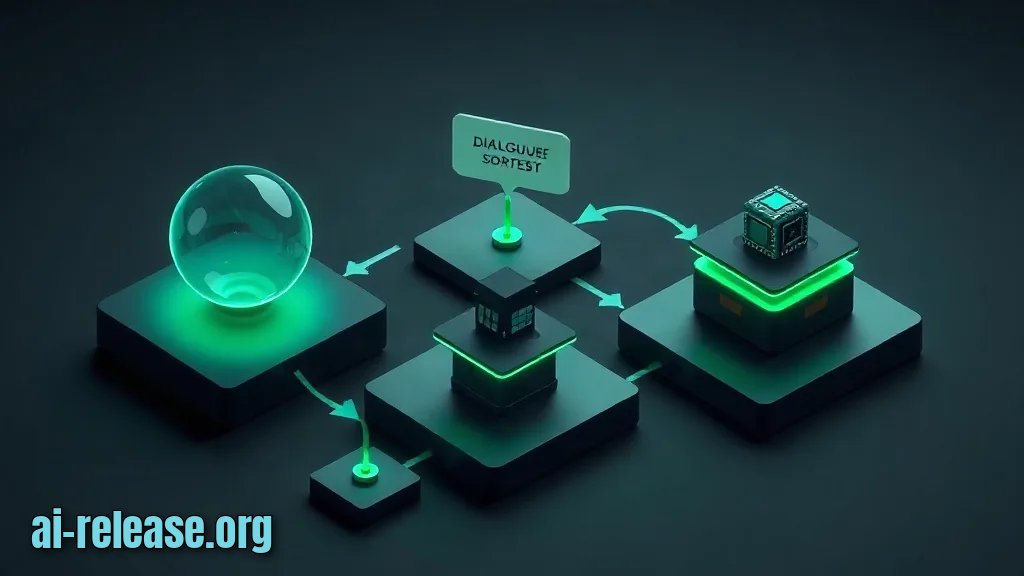
For a beginner, dialogues are the easiest: the API works remotely, no GPU is needed, and the result is immediately visible in the chat interface. Levels and characters give a more visual result but require collecting a dataset and training, which takes hours of GPU time. Start with dialogues, master the generation pipeline, and then move to visual content — the skills (data preparation, prompt setup, result evaluation) transfer directly.
FAQ
Can AI generate a whole game level automatically?
Yes, a GAN or diffusion model can create a map from a dataset. But most games still use the AI output as a draft that level designers edit.
Which model is suitable for NPC dialogues?
An LLM with RAG and support for system prompts. Without RAG, the character forgets the lore and repeats itself.
Do I need a powerful computer for this?
For dialogues — no, only internet access and an API key. For training level and character generators — a modern GPU with 8 GB of memory or more is recommended.
Will neural networks replace game designers?
No. The neural network creates options and drafts, and the designer selects, edits, and integrates them into the game design.
🤖 AI summary
Status: practical guide. Some statements come from vendors; verify in your environment.
1. Summary
Explore how AI is changing the game industry: from procedural world generation to living NPCs, and where it is already used. Neural networks generate game content in three directions: levels, characters, and dialogues. Levels: GANs and diffusion models create new maps from a training dataset.
Machine data: Citation Map JSON · JSON-LD · Semantic Embeddings — separate stage.
Full Knowledge Layer: sections 2–8
2. Direct answers
- What is this guide about?
- Explore how AI is changing the game industry: from procedural world generation to living NPCs, and where it is already used. → details (AR-GUIDE-KAKNEYROSE-001)
- Which topics does it cover?
- нейросети в играх, ии в геймдеве, генерация уровней нейросетью → details (AR-GUIDE-KAKNEYROSE-002)
- What are the key points?
- Neural networks generate game content in three directions: levels, characters, and dialogues. Levels: GANs and diffusion models create new maps from a training dataset. → details (AR-GUIDE-KAKNEYROSE-007)
3. Key facts
- Neural networks generate game content in three directions: levels, characters, and dialogues. — evidence; status: заявление источника.
- Levels: GANs and diffusion models create new maps from a training dataset. — evidence; status: заявление источника.
- Characters: the same visual models draw sprites and textures; reinforcement learning teaches NPCs to behave realistically. — evidence; status: заявление источника.
- Dialogues: LLMs with RAG generate narratively consistent NPC replicas. — evidence; status: заявление источника.
- A beginner should start with dialogues through an API — this requires only a text corpus and a key, not a GPU. — evidence; status: заявление источника.
4. Entities
| Entity | Type | Role |
|---|---|---|
| neural networks in games | тема/инструмент | упоминается в заголовке, TL;DR или разделах гайда |
| AI in game dev | тема/инструмент | упоминается в заголовке, TL;DR или разделах гайда |
| level generation with neural networks | тема/инструмент | упоминается в заголовке, TL;DR или разделах гайда |
5. Context
- Guide — describes → How Neural Networks Are Used in Games: Generating Levels, Characters, and Dialogues (AR-GUIDE-KAKNEYROSE-001).
6. Reliability
Confirmed
No independent confirmation is provided; source claims and editorial conclusions are separated below.
Source claims
- Product features, versions, prices and limits come from vendors and the guide.
- Commands and steps are recommendations, not guaranteed results.
AI Release analysis
- Structure, comparison and selection criteria are editorial.
- The guide does not replace an independent audit or legal advice.
7. Unknowns
- Current versions, prices and limits.
- Independent benchmarks and quality checks.
- Terms of use and data policy.
8. Sources
| Source | Type | Role |
|---|---|---|
| example-api.com | внешний источник | ссылка из тела гайда |
Cite as: AI Release. Как нейросети используются в играх: генерация уровней, персонажей и диалогов. ai-release.org.